Industry News
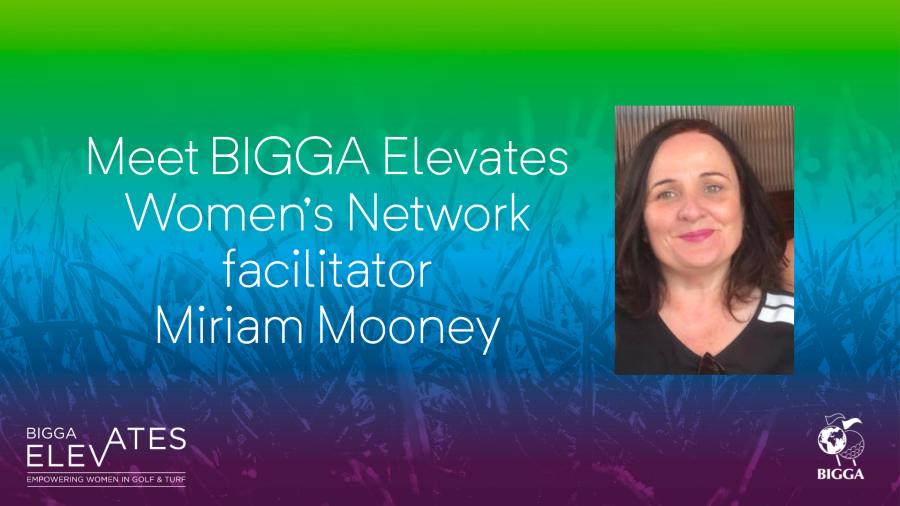
BIGGA Elevates launches new Women’s Network to support careers…



You can read our latest issue online anytime, anywhere. Enjoy instant access to fresh stories, insights, and features straight from your device, no downloads required.


Syngenta has announced the building of a new £100 million world-leading research centre for agricultural bioscience at its existing R&D hub at Jealott’s Hill in Berkshire.
The Biological Sciences Technology and Research centre (BioSTaR) will deliver the latest advances in biological sciences, molecular and analytical research and digital innovation to shape the future of sustainable plant health.
Significant investment in cutting-edge AI capabilities will accelerate Syngenta’s ability to design and deliver the next generation of differentiated agricultural solutions . Once complete, the BioSTaR facility will bring together approximately 300 scientists who already work at Jealott’s Hill, uniting their expertise in a purpose‑built environment designed to accelerate discovery and product development.
It is expected to be fully operational in just two years, 2028, further strengthening the UK’s role as a global center for plant science innovation and ensuring scientists have the advanced infrastructure needed to push the boundaries of bioscience, digital research and AI‑driven innovation.
New scientific frontiers are emerging rapidly and the new BioSTaR facility will bring these advances together under one roof – from designing plant protection solutions with novel modes of action and anticipating resistance before it develops, to creating products that respond to environmental signals such as temperature and soil quality.
By combining these capabilities at BioSTaR, scientists will deepen understanding of how pests, pathogens, plants and soils interact, and accelerate the development of tools that protect plants more effectively, reduce environmental impact and strengthen systems in a changing climate. For example:
“At Syngenta, we are focused on creating a more productive and sustainable future for agriculture. With this investment, we are pushing the boundaries of science,” said Camilla Corsi, Global Head of Crop Protection R&D at Syngenta.
She added that Syngenta’s leadership is built on cutting‑edge infrastructure and its culture of scientific excellence. “Our ability to collaborate across disciplines, across borders and with partners worldwide is core to our success. It powers our speed, our creativity and our impact,” she explained.
With the Jealott’s Hill research hub already the UK’s largest facility dedicated to agricultural technology research, the investment in BioSTaR signals the next chapter in its critical role in advancing innovation.
Syngenta invests more than £600 million annually in plant protection R&D, incorporating AI and fostering research collaborations that accelerate its work at the frontiers of science. The investment in BioSTaR in the UK is part of a long-term strategy to fortify its research capabilities around the world, which also includes global research hubs in Switzerland, the US and China.
© Copyright 2026. All rights reserved.