Industry News
BIGGA Elevates launches new Women’s Network to support careers…




You can read our latest issue online anytime, anywhere. Enjoy instant access to fresh stories, insights, and features straight from your device, no downloads required.

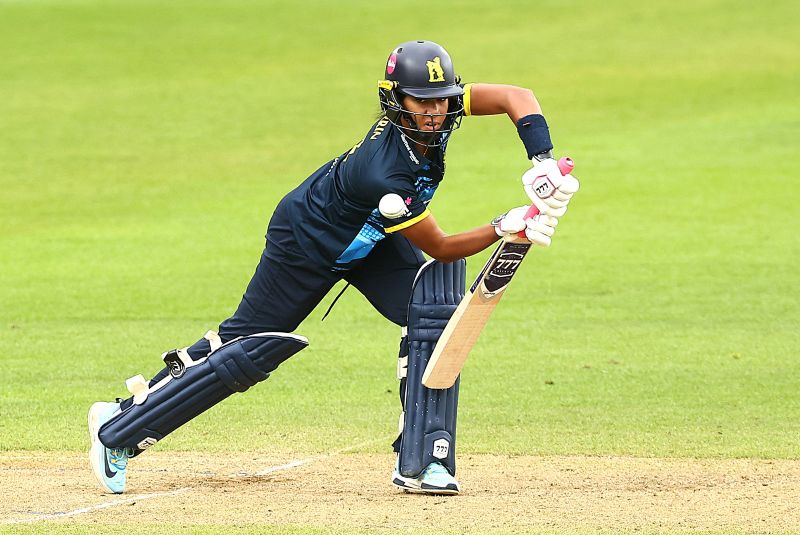
From hybrid pitches to outfield preparation strategies, UK cricket is at the forefront of many exciting new developments as the demands of the different formats of the game are creating innovative new solutions.
The cricket calendar is growing every year. The popularity of the sport in its various formats has placed huge demands on those charged with preparing pitches and outfields.
Whether it is the flagship five-day test, or the short and sharp 20-over blast, the highest quality pitches and world-leading turf management standards need to be maintained for every single match.
It has led cricket to investigate, trial and instigate new and innovative management and preparation programmes. Research & Development strategies have increased significantly in the last decade and now cricket is pushing the boundaries of professional groundscare.
For grounds teams there is now so much foot traffic across outfields and pitches, that the challenge of maintaining world-leading standards has never been greater.
The need for consistent and even bounce, across all competitions, has prompted one of the country’s leading cricket arenas, Edgbaston, to consider how new surface technology could improve durability and quality. As the stadium undergoes a significant redevelopment aimed at creating a truly world class sports complex, so the pitch and outfield has seen vital new investment embracing hybrid surfaces and outfield management.
Gary Barwell, Edgbaston’s Head of Sports Turf explains that the SIS Grass Hybrid pitch installed by SIS Pitches on its main playing area has allowed the stadium to better manage cricket’s increasingly busy schedule without compromising performance. It’s also provided parity, allowing the women’s teams to practice and compete on the same pitches as the men.
Edgbaston’s experiments and trials with hybrid surface systems can be traced back almost a decade pitch can be traced back to 2017 and lessons being learned from another sport entirely.
“The hybrid concept emerged as a frontrunner after a visit to St. George’s Park, the FA’s national football centre,” said Gary.
“Our first trial began with the UK’s first day-night test between England and West Indies. The bowlers had full use of it throughout, sending plenty of deliveries, and initial impressions were very positive. The players said it had a better carry and more consistent bounce, along with much less wear and tear. This was a key moment for us because player feedback really carries in this sport.”
With the ECB sanction and a pause to tournament play due to the pandemic, Edgbaston found itself with a window to install its first two pitches within the main square. “Our main square install got off to a flying start, which was reflected in the high scoring we were seeing,” Gary continues. “If I remember correctly, the first match was 150/1 off 10 overs. That’s the type of action you want to see when fans come down for an evening.”
For Edgbaston, the impact of SIS Grass Hybrid is best seen through the success of several major competitions, chiefly among them the Commonwealth Games held in 2022. During the games, the stadium hosted 16 international women’s matches played over a two-week period. With an all-natural pitch, this intense window of competition would typically require a high number of maintenance intervals to keep wickets up to standard. With SIS Grass Hybrid, however, the window was expanded, allowing top-level performance without major interventions so often from the grounds team.
“On traditional pitches, you see really good performance on day one, but there’s typically a steep decline once you get into days three or four,” said Gary. “We noticed with hybrids you could play on them over 10-12 days and not see a drop off. You only have to prepare one pitch, as opposed to two or three for the same amount of game time. This was massive for us during the games, with 60,000 people in the stadium and many more watching around the world.”
With hybrids now approved by the ECB for some red-ball competition, there is seemingly more to come at Edgbaston. “We’ll continue to invest in our hybrid surface because it’s proven effective at the highest level,” says Barwell. “For us, it’s about lowering the maintenance requirement while also delivering the best possible performance – for both players and fans. SIS Grass Hybrid has given us that option. Sporting theatre at its best.”
Sustainable cricket installation completed
It is not just the elite venues that are embracing such significant change.
Notts Sport completed the world’s first CocoTurf Cricket match pitch at Bitteswell Cricket Club, a sustainable cricket surface designed to support year-round training and play.
The project – delivered by Notts SportCricket North Licensee, Bingham Ground Services – followed consultation with the club to identify a low-maintenance solution capable of meeting increasing demand across both junior and senior cricket.
Sustainability was a key driver behind the project, Bitteswell Cricket Club selected CocoTurf Cricket, the world’s first 100% natural, plastic-free artificial cricket surface, engineered to replicate the pace and bounce of natural turf while offering consistent performance and long-term durability and at the heart of the design, sustainability.
CocoTurf Cricket builds on Notts Sport’s pioneering CocoTurf technology and has been specifically re-engineered for cricket performance. The surface is constructed entirely from natural coconut fibres, jute backing and certified natural latex, creating a wicket system with zero plastics, zero microplastics and zero PFAS. This makes it the world’s first artificial cricket surface of its kind.
The system has undergone full cricket performance testing, including a Ball Pitch Impact Assessment, confirming realistic pace, consistent bounce and durability comparable to professionally prepared non-turf wickets. An ECB application is also currently in process.
By adopting CocoTurf Cricket, Bitteswell Cricket Club has invested in a future-proof facility that supports sustainable sports development without compromising performance.

Richard Pearson, the club’s Chairman said: “CocoTurf has been installed as an outdoor practice facility at the edge of the square, creating both a junior match pitch and a practice pitch for senior players. It has been extremely well received across the club.
“Our junior teams have already played matches on it and thoroughly enjoyed the experience. The bounce is consistent and at a realistic height — neither too low nor too high.
“Senior players use the mat regularly with a roll-on net cage and report consistent bounce with a small amount of seam movement. The surface also offers enough grip to assist spin bowlers without producing excessive turn.
“Overall, it provides an excellent practice environment with a genuine contest between bat and ball. Unlike many artificial mats, CocoTurf does not lull batters into a false sense of security and better prepares them for match conditions on grass.”
Notts Sport CEO Duncan Bennett explained: “This isn’t just another surface – it’s a revolution in sustainable cricket design. For the first time, clubs and communities can install an artificial surface that performs like the real thing – and does right by the planet.”
Each square metre of CocoTurf Cricket uses fibres from 6.5 coconuts, totalling around 585 coconuts for a single-lane pitch. By transforming natural by-products into high performance cricket technology, we’re proving that innovation and sustainability can share the same ground.
Notts Sport Technical Manager Adam Walker added: “CocoTurf Cricket is engineered for players – but designed for the planet.”
Creating high quality playing surfaces is no longer the domain of elite venues, as grassroots clubs around the country are now raising turf standards higher with each passing year.
© Copyright 2026. All rights reserved.