Industry News
Major partners launch nationwide study into golf’s water resilience…



You can read our latest issue online anytime, anywhere. Enjoy instant access to fresh stories, insights, and features straight from your device, no downloads required.

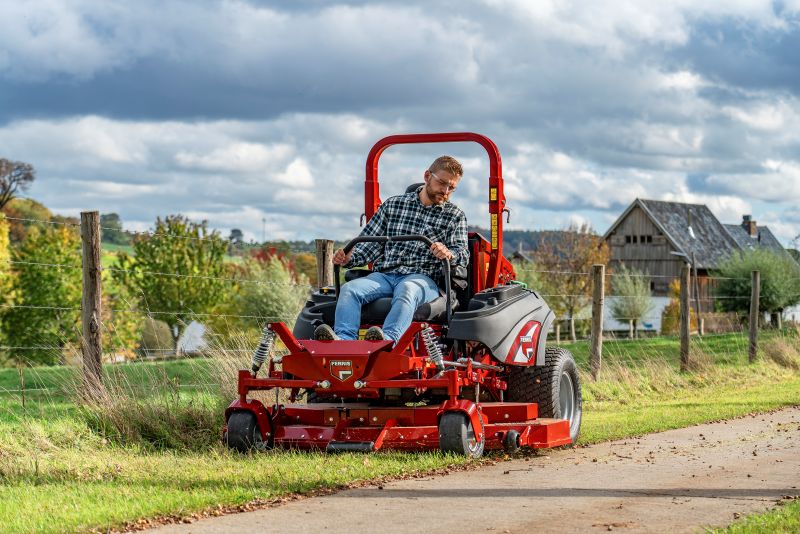
Gerd-Jan Driessen, Business Development Manager EMEA at Ferris, explains why the future of lower-emission commercial grounds maintenance will be shaped by multiple technologies, rather than a single power source.
Sustainability expectations are reshaping the commercial grounds maintenance sector.
Governments and policymakers are setting increasingly ambitious targets for reducing greenhouse gas emissions. This includes the EU’s legally binding target of a 90% net emissions reduction by 2040, on the path to climate neutrality by 2050. Consequently, businesses are facing growing pressure to demonstrate how they are reducing emissions across their operations.The challenge is finding solutions that lower environmental impact without compromising the productivity, reliability and performance customers depend on.
Electrification plays a major role in this transition, and for many, it represents the most obvious choice and the logical conclusion for emission reduction. However, the obvious answer isn’t always the only answer, nor is it necessarily the quickest road to reducing emissions. Commercial mowing is a diverse industry, meaning the challenge is not simply adopting greener technologies, but ensuring they can meet the relentless operational demands of the job, day in and day out.
Professional grounds maintenance presents very different demands from domestic gardening. Contractors often work long days across varied environments, from roadside verges and steep banks to sports pitches and large public spaces, all while working to fixed schedules and customer expectations. For sustainability initiatives to succeed, they must fit within these operational realities. Fleet decisions are shaped by much more than environmental ambitions alone; cost-effectiveness, reliability, productivity and the ability to keep work moving are equally important considerations.
Introducing battery-powered equipment, for example, can require investment in new machines, additional battery capacity, charging infrastructure and revised workflows. Electrification brings clear benefits, particularly in reducing emissions at the point of use, and for some businesses that investment is a natural next step. For others, particularly those operating large, high-utilisation fleets or equipment where extended runtime and power are essential, alternative approaches can offer a more practical fit. Factors such as upfront investment, charging requirements and downtime, equipment capabilities, the wider lifecycle of batteries and the demands of individual applications will carry different weight depending on the operating environment. Rather than positioning one technology as the answer, contractors should consider the full operational and environmental picture when determining the most appropriate route to lower emissions.
HVO100 can provide one such option, allowing businesses to reduce emissions while continuing to use existing compatible equipment.
The important point is that sustainability should support the way professional contractors work, recognising that priorities and operational requirements vary considerably from one business to another. The right approach will depend on the work being undertaken, the equipment already in service and the needs of the individual operation. Replacing serviceable machinery before the end of its useful life can itself carry an environmental and financial cost, making it important to consider how existing equipment can continue to operate more sustainably. There is therefore no single route to reducing emissions. Battery-electric equipment, HVO100 and other technologies can each play a role where they offer a practical fit, while for some contractors the most effective approach may be to use a combination of solutions. Providing a range of options gives businesses the flexibility to make meaningful changes when and where appropriate, without compromising productivity or operational performance.
Making the most of existing fleets
For many contractors, one of the biggest considerations is the equipment they already own. Commercial mowing fleets represent significant long-term investments and are often expected to deliver reliable performance over many years. Replacing every diesel-powered machine before the end of its operational life is not always the most practical or commercially viable route to reducing emissions.
This is where HVO100 offers an immediate and viable route to lower emissions. As a renewable paraffinic diesel fuel, it can replace conventional fossil diesel in approved engines without requiring any modifications. Produced from renewable waste and residue feedstocks and manufactured to EN15940 standards, HVO100 can reduce lifecycle greenhouse gas emissions by up to 90% compared with fossil diesel, depending on feedstock and methodology used. While eliminating emissions entirely remains the ultimate ambition, achieving reductions of this scale today represents a significant step forward. Crucially, HVO100 allows organisations to act immediately by lowering the carbon impact of compatible equipment already in service, without waiting for replacement machinery or new infrastructure.
For organisations managing large-scale diesel mower fleets equipped with HVO-compatible engines, HVO100 provides a highly credible, long-term pathway for reducing emissions in tandem with other technologies. Its drop-in compatibility allows operators to improve the sustainability of existing assets, and simultaneously continue to benefit from the performance, reliability, and established working practices their operations depend on.
Within the Ferris range, the IS® 6200 Diesel Zero Turn Mower and IS® 2600 Diesel Zero Turn Mower are compatible with and approved for HVO100 fuel, empowering professional operators to make a decisive, seamless shift towards lower-carbon operations today.
Productivity remains the priority
Ultimately, every investment in lower-emission solutions must support the professional contractor’s ability to deliver operationally and commercially. Whether maintaining highway verges, preparing sports surfaces or managing public green spaces, equipment must perform reliably through long working days and challenging conditions. Downtime affects schedules, customer satisfaction and profitability, making productivity central to every fleet decision.
Affordability is equally important. While local councils and commercial clients increasingly expect environmentally responsible practices, they are rarely prepared to absorb the associated premium. Landscaping businesses must therefore be able to reduce emissions without increasing their costs to a level that makes their tenders uncompetitive.
For Ferris, supporting customers as the industry evolves means recognising these commercial and operational realities. Sustainability is an essential objective, but lower emissions cannot come at the expense of reliability, performance, quality of work or a contractor’s ability to compete.
The commercial grounds maintenance sector is entering a new era of lower-emission working, but there is unlikely to be a one-size-fits-all solution.
At Ferris, we believe success will come from giving professional contractors the flexibility to choose the technologies that best suit their operations. By balancing sustainability with productivity, reliability and performance, the industry can continue making meaningful progress without compromising the standards customers expect.
© Copyright 2026. All rights reserved.