Industry News
Major partners launch nationwide study into golf’s water resilience…



You can read our latest issue online anytime, anywhere. Enjoy instant access to fresh stories, insights, and features straight from your device, no downloads required.

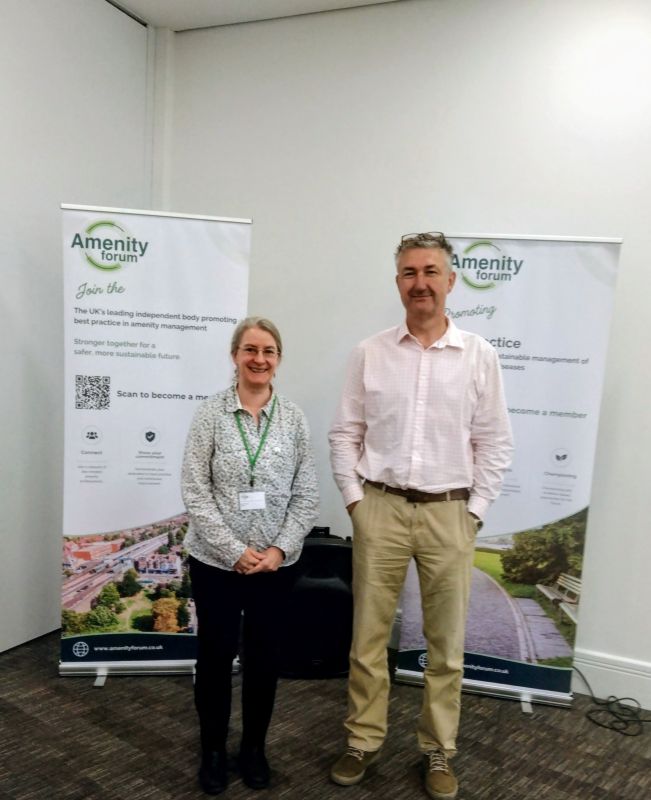
New practical guidance to help the professional amenity sector manage the risk of glyphosate resistance has been published by the UK Weed Resistance Action Group (WRAG) in partnership with the Amenity Forum. We asked Ian Graham, Chair of the Amenity Forum, and Dr Lynn Tatnell what the significance of the new guidance means.
Launched at the Amenity Forum Annual Conference, the guidance brings together current technical knowledge on resistance management and translates it into practical steps for those responsible for vegetation management in amenity settings.
Glyphosate remains an important tool for many professional amenity managers, but its continued effectiveness depends on responsible use and good stewardship. The guidance highlights the importance of avoiding over-reliance on a single approach, maximising the effectiveness of applications, monitoring treatment outcomes and responding appropriately where plants survive treatment.
It focuses on practical principles including preventing survivors, maximising efficacy, using alternative approaches as part of Integrated Pest Management (IPM), and monitoring success. The guidance also helps practitioners understand when resistance should be suspected, how surviving weeds should be managed and the role of resistance testing where appropriate.
What trials and testing have taken place into glyphosate resistance?
The Weed Resistance Action Group (WRAG) has brought together research and technical expertise on herbicide resistance, including work by ADAS. The first UK confirmation of glyphosate-resistant Italian ryegrass came in 2025. At the Amenity Forum’s Annual Conference on 8 October, Dr Lynn Tatnell of ADAS reported that three populations have now been confirmed. These are important early warnings, rather than evidence that glyphosate resistance is widespread across the UK.
Resistance develops when plants survive a dose that would normally control them and repeated use of the same herbicide allows those plants to become more prevalent. Dr Tatnell highlighted particular risks for amenity management, where glyphosate is widely used and there are fewer herbicide alternatives. That makes early action and good stewardship especially important.
We have an opportunity to act proactively, rather than waiting until resistance becomes a widespread operational problem.
How has this research shaped the new guidance launched by the Forum?
The new guidance has been developed in partnership with WRAG to translate the emerging evidence around resistance into something practical and relevant for professional amenity users.
The central message is that effective stewardship means minimising unnecessary pesticide use while ensuring that, where glyphosate is justified, it is applied appropriately, effectively and within an Integrated Pest Management (IPM) strategy.
Practical measures include preventing weed establishment and preventing weeds from setting and shedding viable seed, choosing the right treatment timing and approved dose, checking application conditions and equipment, and keeping good records. Product formulation also matters: adjuvants can improve wetting and uptake in some circumstances, particularly where a formulation does not already contain an effective adjuvant system. Any additional adjuvant must be compatible with the product and permitted by its label and relevant authorisations.
After treatment, practitioners should monitor surviving plants, investigate the reasons for poor control and consider appropriate follow-up measures, such as mechanical removal or an alternative authorised treatment where one is available. Options can be particularly limited in amenity management. Repeatedly treating the same surviving plants with glyphosate is not a sound resistance-management strategy.
Poor control does not automatically mean resistance. Before drawing that conclusion, practitioners should check whether the product was appropriate for the species, whether the dose and timing were correct, whether weather and equipment affected application, and whether all plants were reached. Unusual survivors should be monitored and mapped, with specialist advice or testing sought promptly where resistance is suspected. The Forum’s role is to translate this science into usable advice for people making decisions on the ground.
What does this mean for overall glyphosate use in the UK?
The findings reinforce the importance of responsible, evidence-based glyphosate use within an integrated approach to vegetation management.
Glyphosate remains an important tool in professional vegetation management where its use is authorised and appropriate. The emergence of resistance reinforces the need to protect its effectiveness through responsible stewardship.
In amenity, IPM starts well before an application. Practical examples include preventing debris accumulating in pavement cracks and gutters, considering future maintenance when designing spaces, and stopping weeds setting seed. Site conditions, available cultural, mechanical and other controls, and the outcome required should all inform the decision. The debate should not be reduced to a simple chemical versus non-chemical choice.
How is the Forum working to raise awareness about glyphosate use and how does the new guidance fit into that advice?
This is part of a much wider programme of work around responsible pesticide use, IPM and professional standards.
We have been using our Updating Events, Annual Conference programme, member communications, media work and engagement with regulators and stakeholders to ensure the amenity sector understands both the changing regulatory environment and what responsible practice looks like.
The new guidance developed with WRAG gives practitioners practical steps to reduce risk: prevent weed build-up, prevent weeds from setting and shedding viable seed, use suitable application timing and approved dose, consider product formulation and adjuvants where appropriate and permitted, monitor results and investigate surviving plants. Follow-up may involve mechanical control or another authorised treatment where available, recognising that amenity practitioners often have limited alternatives. The guidance also explains the importance of recognising possible resistance early and seeking advice, rather than assuming every control failure is resistance.
It’s also about protecting credibility. If the amenity sector wants to retain access to effective plant-protection tools, we need to be able to demonstrate that they’re being used professionally, responsibly and only where appropriate.
Education and continuous training are vitally important for the amenity and groundscare sectors.
That’s one reason collaboration is so important. Working with organisations such as WRAG allows us to connect specialist technical expertise with the Forum’s reach across professional amenity.
What does the future hold for glyphosate use in the UK?
There are two separate questions here: the regulatory future of glyphosate and how we use it responsibly while it remains available.
Glyphosate’s regulatory future in Great Britain is subject to HSE’s renewal assessment and associated decision-making. The timetable and outcome should not be treated as settled: any future approval, restrictions or other regulatory changes will depend on that process. The Forum will continue to follow developments and communicate confirmed information to members.
So, it would be wrong for the Forum to predict the outcome of that regulatory process.
What we can influence is stewardship. The emergence of resistance makes the case for professional, targeted and evidence-based use even stronger. Our priority is to ensure the amenity sector understands the risks, embraces IPM and uses glyphosate responsibly where it remains the appropriate tool.
That is how we give ourselves the best chance of protecting both its efficacy and the sector’s ability to demonstrate responsible use.
© Copyright 2026. All rights reserved.